

Technology Isn't Replacing Care. But It Might Be Challenging Some of Our Assumptions.
Article By Murray Bell
"One thing I've learned from spending time with care providers is this: The best care will always come from people. Not from software, sensors, or AI, but from people.
The experienced carer who notices a resident isn't quite themselves today brings a level of empathy and understanding that technology can never replicate. The best outcomes happen when that expertise is supported by better information.
So when people talk about technology replacing care, I think they're asking the wrong question.
The real question is whether we're giving care teams the information they need to make the best possible decisions that increase patient safety and wellbeing.
Falls are a good example.
Every care provider takes falls seriously. Risk assessments are reviewed, care plans are updated, and teams work incredibly hard to balance safety with independence.
Unfortunately falls still happen. What interests me is what happens next.
A resident is found on the floor, staff respond quickly and appropriately and procedures are followed. However, in many cases the biggest challenge is understanding what actually happened.
That might be uncomfortable to admit, even with a robust investigation process, important details can sometimes remain unclear after an incident.
I've spoken to providers whose biggest frustration wasn't the fall itself, it was the uncertainty afterwards.
Families naturally want to understand what happened to their loved one. They want reassurance that the right actions were taken and confidence that every possible lesson has been learned. When providers have a clearer picture of events, those conversations become far easier and far more transparent.
That's where I think technology has the greatest value.
Not by making decisions for care teams, but by providing clearer evidence, better context and a more complete picture of events.
For me, the most useful technology isn't the technology that collects the most data, it's the technology that helps answer the questions that matter afterwards.
Understandably, conversations about technology in care often raise important questions around privacy, dignity and resident choice. The most effective solutions are those that can support safety while respecting all three.
Solutions such as AI-assisted monitoring are helping providers access clearer evidence, faster incident reviews and greater reassurance for families, while still maintaining privacy and dignity. That's a conversation the sector can no longer afford to ignore.
Care is becoming more complex, expectations are increasing, and providers are under more pressure than ever. That's why I don't see technology as replacing the human side of care, I see it as strengthening it.
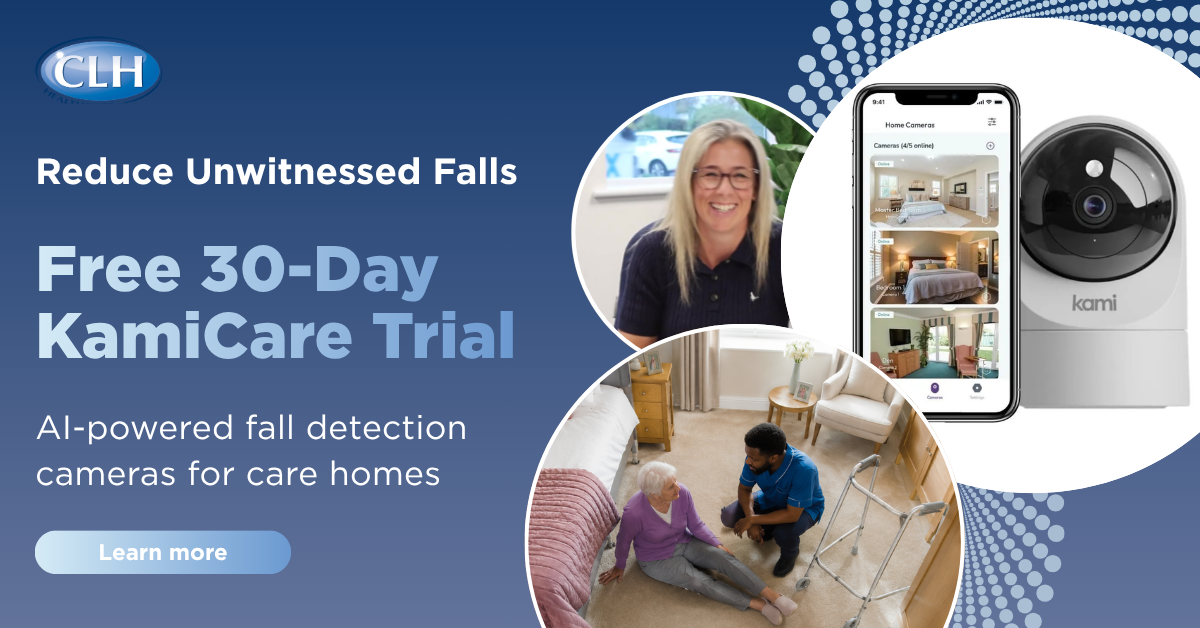
This is one of the reasons we're seeing growing interest in AI-assisted monitoring solutions such as Kami. Rather than simply notifying staff that an incident has occurred, providers can access visual evidence and context that supports investigations, helps identify patterns and enables more informed decisions about future care.
Better information allows care professionals to focus on what they do best - caring for people."
Find out more about Kami here
"One thing I've learned from spending time with care providers is this: The best care will always come from people. Not from software, sensors, or AI, but from people.
The experienced carer who notices a resident isn't quite themselves today brings a level of empathy and understanding that technology can never replicate. The best outcomes happen when that expertise is supported by better information.
So when people talk about technology replacing care, I think they're asking the wrong question.
The real question is whether we're giving care teams the information they need to make the best possible decisions that increase patient safety and wellbeing.
Falls are a good example.
Every care provider takes falls seriously. Risk assessments are reviewed, care plans are updated, and teams work incredibly hard to balance safety with independence.
Unfortunately falls still happen. What interests me is what happens next.
A resident is found on the floor, staff respond quickly and appropriately and procedures are followed. However, in many cases the biggest challenge is understanding what actually happened.
- Was the resident attempting to do something independently?
- Was there a pattern of behaviour beforehand?
- How was the fall handled by care staff?
- Could anything have been done differently?
That might be uncomfortable to admit, even with a robust investigation process, important details can sometimes remain unclear after an incident.
I've spoken to providers whose biggest frustration wasn't the fall itself, it was the uncertainty afterwards.
Families naturally want to understand what happened to their loved one. They want reassurance that the right actions were taken and confidence that every possible lesson has been learned. When providers have a clearer picture of events, those conversations become far easier and far more transparent.
That's where I think technology has the greatest value.
Not by making decisions for care teams, but by providing clearer evidence, better context and a more complete picture of events.
For me, the most useful technology isn't the technology that collects the most data, it's the technology that helps answer the questions that matter afterwards.
Understandably, conversations about technology in care often raise important questions around privacy, dignity and resident choice. The most effective solutions are those that can support safety while respecting all three.
Solutions such as AI-assisted monitoring are helping providers access clearer evidence, faster incident reviews and greater reassurance for families, while still maintaining privacy and dignity. That's a conversation the sector can no longer afford to ignore.
Care is becoming more complex, expectations are increasing, and providers are under more pressure than ever. That's why I don't see technology as replacing the human side of care, I see it as strengthening it.
This is one of the reasons we're seeing growing interest in AI-assisted monitoring solutions such as Kami. Rather than simply notifying staff that an incident has occurred, providers can access visual evidence and context that supports investigations, helps identify patterns and enables more informed decisions about future care.
Better information allows care professionals to focus on what they do best - caring for people."
Find out more about Kami here
Associated Product List

